
Backend language
PHP
Backend runtime for the game domain, server-side validation, automation, and application services.
An Aptenova-owned product
A shared game, live in the browser. This online adaptation of Citadels, the card-driven tabletop game by Bruno Faidutti, connects room setup, hidden roles, turns and scoring for real players and automated opponents.
Realtime
Turns, timers, room state, and table updates move without page reloads.
Automation
Rules-aware bot opponents evaluate the board, their own hand, and scoring pressure without reading hidden player cards.
PWA
The product can be installed and reopened like an app from the browser.
Inside Citadels Online
Choose a chapter to see the interface and the work behind it.
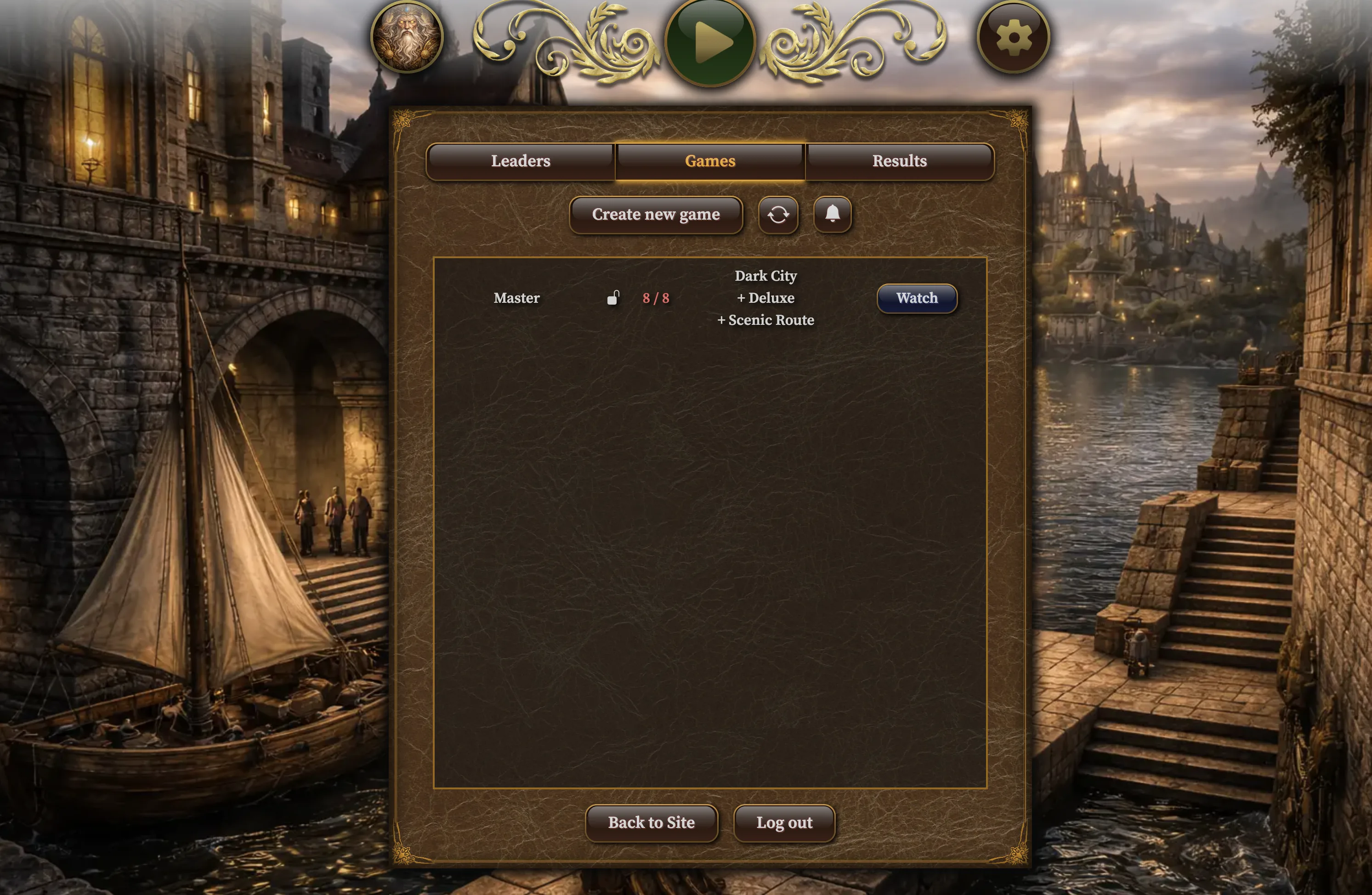
Players enter the lobby, create or join rooms, watch active games, and move between leaderboards and recent results.
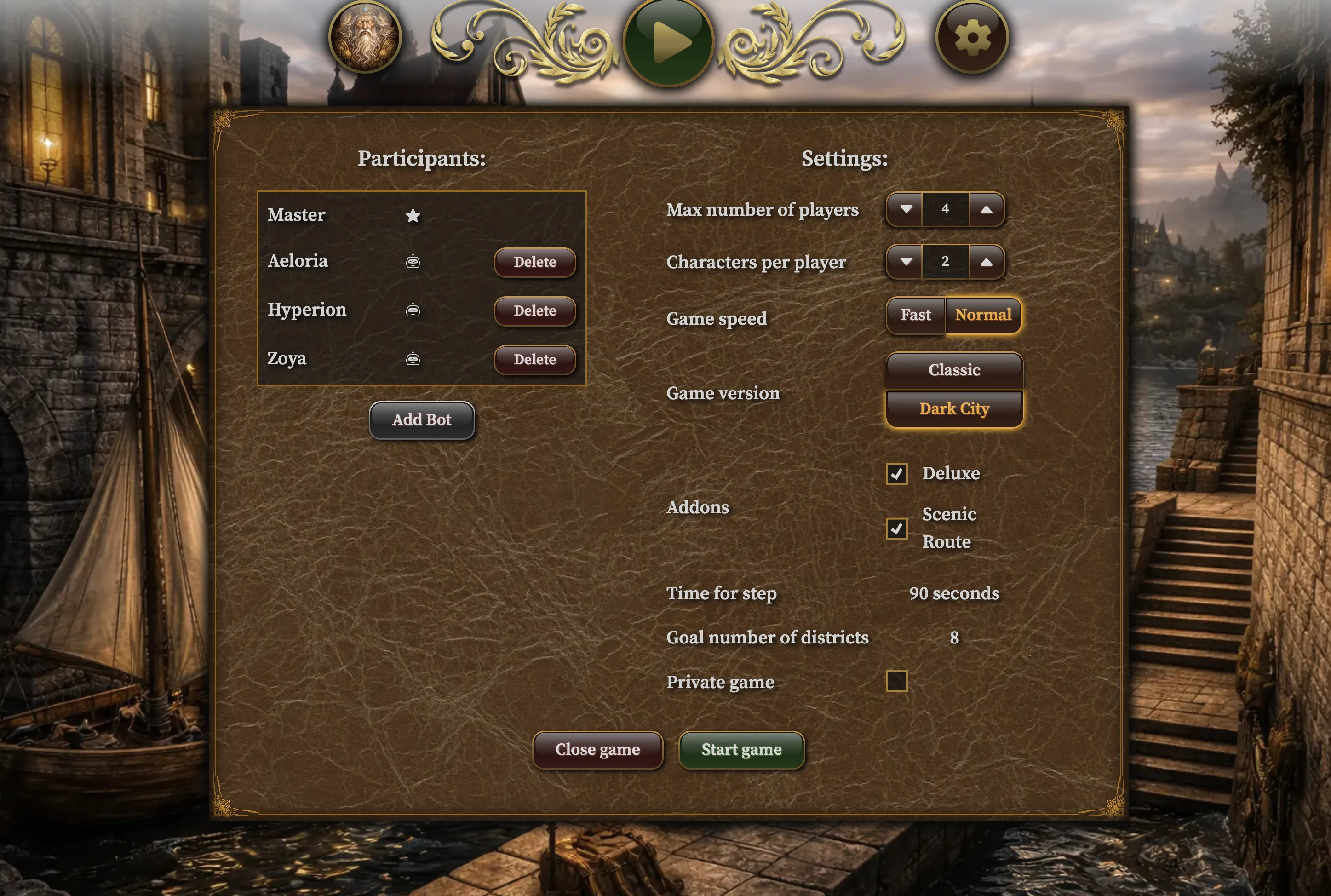
The room owner configures player limits, characters per player, speed, game version, addons, target districts, privacy, and bots.
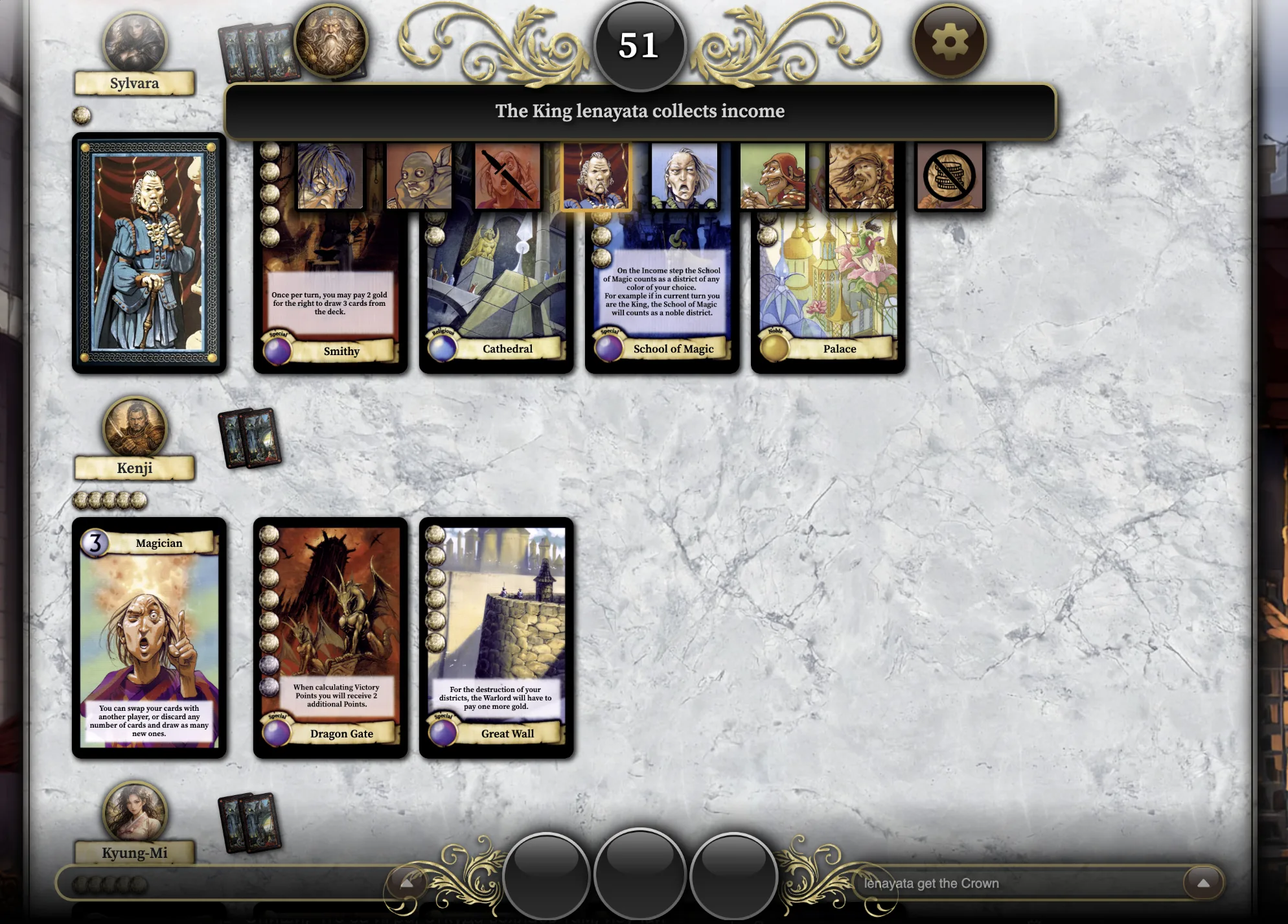
The game table tracks characters, districts, gold, cards, timers, messages, player state, and the current turn in realtime.
Realtime product development
Players collect gold, draw district cards, secretly choose character roles, use character abilities, and build city districts. The match ends when the target number of districts is reached, then the product calculates points and declares the winner.
Each game starts from a room: players create a public or private table, configure the rules, invite real people, or add automated bot opponents with decision logic tuned for the current table state.
Every round changes the active roles. Character rank defines turn order, while character abilities create attacks, protection, theft, card exchange, income, and building decisions.
Players score through built districts, bonus district effects, completed city goals, and end-game bonuses. The highest score wins; draws are handled by the game flow.
The live product includes leaderboards, personal results, game history, spectator mode, and five interface languages: English, Russian, Ukrainian, Polish, and German.
Key Features
The strongest part of the product is the full playable system behind the table: rules, rooms, live state, bots, scoring, and player-facing flow all work together in the browser instead of staying as a static demo.
The product handles hidden role selection, turn order, character abilities, gold, district cards, building rules, end-game triggers, and final scoring.
Players can create public or private rooms, tune match settings, invite people, watch games, and see room state update live.
Bots make weighted decisions from visible state and their own hand, respect hidden information, and can make rare randomized mistakes so solo play feels less mechanical.
Classic, Dark City, Deluxe, and Scenic Route options let the same product support different rule sets and player expectations.
Finished games feed personal results, match history, recent outcomes, and leaderboard surfaces instead of disappearing after a session ends.
Five interface languages and PWA support make the game easier to return to across markets and devices.
Product screens
Open any screenshot to inspect it in a preview modal, then move through the gallery with buttons, keyboard arrows, or a horizontal swipe on mobile.
Product surface
Lobby and room flow: public and private games, room settings, leaders, results, spectators, and watch mode.
Game engine: character selection, district cards, income, building, special abilities, timed decisions, and final scoring.
Mode support: Classic, Dark City, Deluxe, and Scenic Route variations exposed through the live app.
Operational surface: authentication, game history, live sessions, PWA access, and admin-facing observability hooks.
Engineering roles
Citadels is not a brochure wrapped around screenshots. It is a working browser game where backend domain rules, realtime transport, persistent storage, and frontend interaction all have to stay in sync during a live turn-based session: the same kind of coordination needed in serious realtime product development.
Backend language
Backend runtime for the game domain, server-side validation, automation, and application services.
Application framework
Main framework for routing, game flow, authentication, jobs, events, and operational tooling.
Database
Relational storage for users, game rooms, turns, cards, scores, and durable product data.
Cache and queues
Fast infrastructure layer for cache, queues, and realtime-adjacent state that should not slow down gameplay.
Realtime transport
Live transport for multiplayer updates, room state, turn changes, timers, and spectator views.
Realtime server
Laravel-native WebSocket server used with Echo-style channels for realtime product behavior.
Server-driven UI bridge
Connects Laravel routes to Vue screens without turning the product into a separate API-first frontend.
Frontend interface
Interactive UI layer for the lobby, game table, cards, player controls, settings, and live feedback.
Browser interaction language
Client-side language for game table interactions, realtime UI updates, room controls, and installable browser behavior.
Build and installability
Frontend build pipeline and installable browser experience for faster repeat access.
WebSocket channels keep player actions, room updates, spectator state, and timers synchronized while Laravel keeps the game rules authoritative.
Bot opponents make weighted decisions from the visible game state, their own cards, role pressure, gold, and scoring opportunities. They do not know the cards held by human players or other bots, and a small randomized mistake chance lets them imitate human play so bot matches stay approachable.
The interface and game content support five languages: English, Russian, Ukrainian, Polish, and German.
Start with a conversation
Let’s discuss live updates, shared workspaces, browser applications or realtime features for an existing product.